
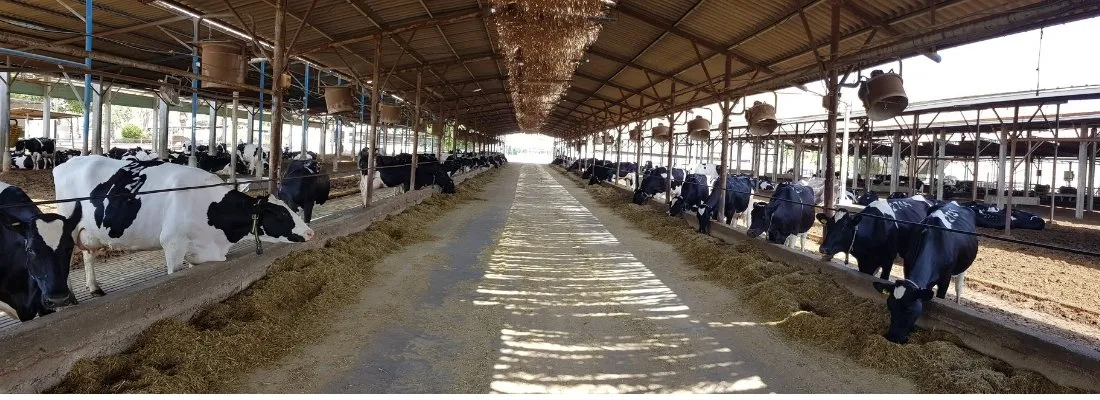
Forage Management: The Foundation of High Milk Production
Practical strategies for dairy feed companies, nutrition teams, and herd managers
Forage management is the structured planning, harvesting, testing, and processing of forage crops to maximize rumen stability, digestibility, and energy availability for dairy cattle. Forage sits inside the broader ration, so it is worth pairing this page with our dairy cattle feed guide for context on how forage interacts with concentrates, minerals, and water intake.
For dairy feed companies and technical advisors, forage quality is the biggest hidden variable behind ration performance.
When forage quality shifts between batches — or between seasons — even a well-formulated ration can underperform in the field.
Improving forage evaluation protects your customers’ results, strengthens trust in your products, and gives your technical team a measurable edge.
At the Israeli Dairy School, forage management is a core module in every professional training program.
Our team of over 50 leading Israeli dairy specialists teaches the practical skills that translate laboratory numbers into on-farm decisions.
Jump to:
Training for feed companies and professional groups
|
Quick forage checklist
|
What participants say
|
FAQs
Note: The Israeli Dairy School provides professional training programs only. We do not offer employment placement, job referrals, or visa services.
Why Forage Quality Drives Ration Performance
Cows convert forage into milk. That single fact makes forage digestibility and fiber structure the most direct levers a nutrition team can influence.
When forage quality is consistent and well-evaluated, rations perform as formulated.
When it is not, the gap between the paper ration and what the cow actually receives can be significant — and costly.
For feed companies, weak forage evaluation creates formulation risk that shows up in the field rather than the lab.
When forage structure properly supports rumen function, cows:
- Maintain stable rumen pH and consistent fermentation
- Ruminate for adequate hours each day, supporting fiber digestion
- Convert feed into milk with higher efficiency
- Maintain strong milk fat levels and avoid subclinical acidosis
- Sustain production even under environmental stress
Forage management therefore becomes a performance control point — not only a farm practice, but a strategic input for every feed company supporting dairy operations.
The Rumen Connection: Why Structure Matters as Much as Chemistry
Laboratory analysis tells you what is in the forage. Rumen biology determines what the cow actually uses.
These are not the same thing.
Effective fiber length — the physically effective NDF (peNDF) fraction — stimulates chewing and saliva production.
Saliva buffers the rumen. When forage is chopped too short, or when fiber is too mature to stimulate adequate chewing, rumen buffering falls and pH becomes unstable.
Practical implications for nutrition professionals:
- Do not rely on NDF percentage alone — assess fiber structure visually and with particle separation screens.
- Monitor chewing time as an on-farm performance indicator. Healthy cows spend approximately 8–10 hours per day chewing.
- Understand that silage fermentation changes fiber structure after ensiling, so retesting after fermentation is complete is essential.
Harvest Timing: A Direct Profit Decision
Harvest timing is the single decision with the greatest influence on forage energy density for the entire feeding cycle.
Once a crop is harvested, its fiber quality is set. No additive or processing step can fully recover digestibility lost to late harvest.
For alfalfa and legume hays:
- Harvest at the bud stage for optimal NDF digestibility (NDFD).
- After 50% bloom, lignin concentration rises rapidly — and lignin is indigestible.
- As fiber matures past optimal stage, energy content falls and the entire silage batch loses milk production potential.
- A few days’ delay in harvest can reduce milk yield by several kilograms per cow per day across the full feeding period.
For corn silage:
- Target dry matter at harvest between 30–38% for optimal fermentation and starch availability.
- Harvesting too wet reduces aerobic stability and increases effluent losses.
- Harvesting too dry reduces packing density, increases oxygen entrapment, and raises mold risk.
Nutrition professionals must understand crop maturity indicators — not only laboratory reports from batches already in the silo.
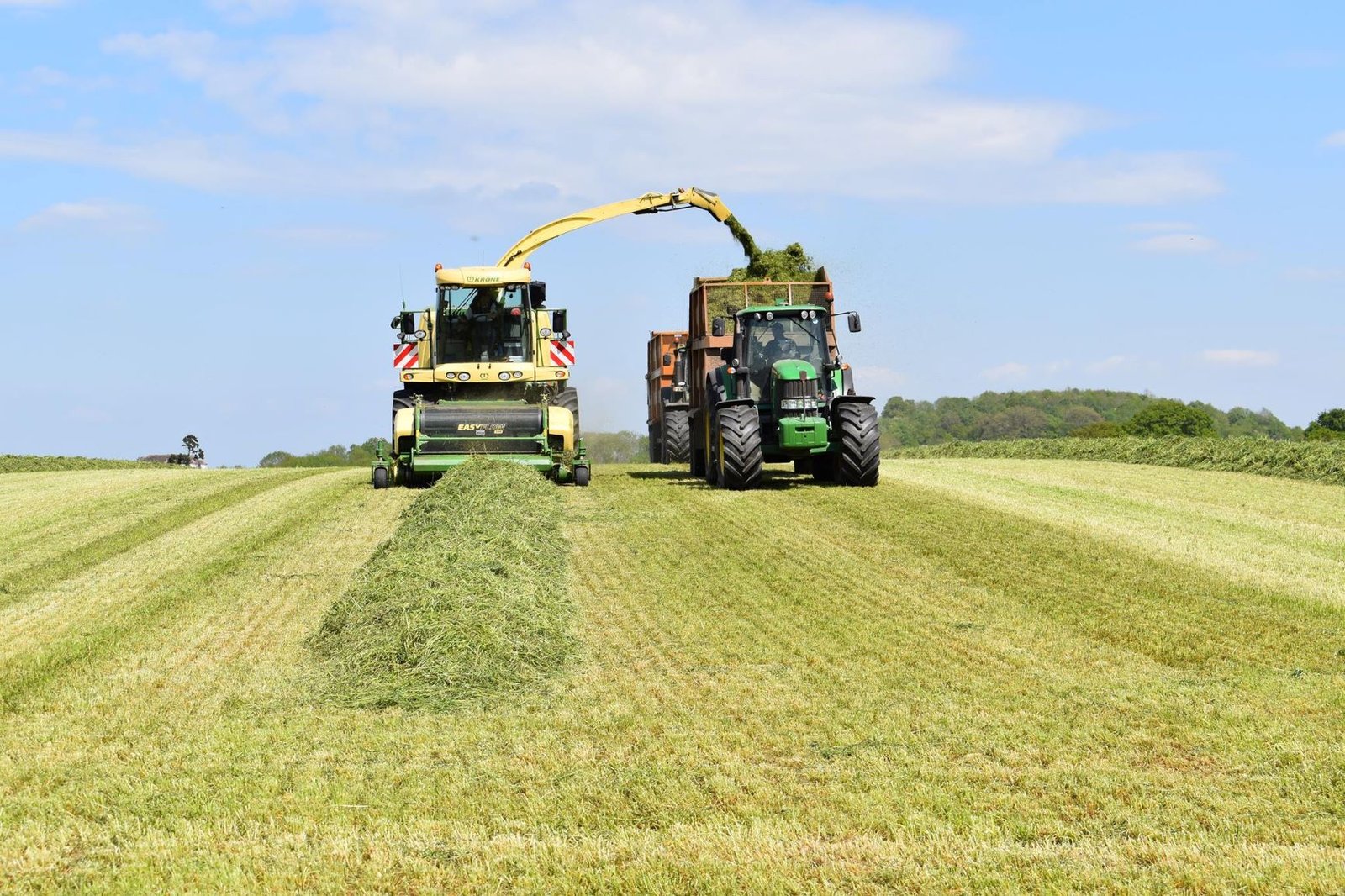
Dry Matter Management: The Source of Silent Ration Drift
Dry matter (DM) percentage in silage changes constantly. Weather, silo face exposure, and fermentation all influence it.
A silage that was 35% DM at harvest may be 28% DM at the face in a wet period.
When the DM percentage drops and feeders do not adjust inclusion weights, cows receive less dry matter than the ration specifies.
This is called ration drift — and it is one of the most common, least recognized causes of unexplained production losses.
Best practice protocols include:
- Measure silage DM at least twice per week using a Koster tester or microwave method.
- Adjust ingredient weights in the ration as DM changes — not just once per batch.
- Track DM trends over time to anticipate seasonal variation.
- Include DM monitoring in technical advisor visit protocols.
Kernel Processing: Protecting Starch Availability in Corn Silage
Corn silage starch is encased in the pericarp. Unless the kernel is cracked effectively at harvest, the rumen cannot ferment the starch efficiently.
Unprocessed or poorly processed kernels pass through the animal largely intact — visible in manure as whole or half kernels, and measurable as fecal starch.
Processing standards that nutrition teams should verify:
- At least 95% of kernels should be cracked open at harvest.
- Most kernels should break into four or more pieces for optimal rumen access.
- Processing roll gap should be set and checked regularly — typically 1–3 mm depending on hybrid and maturity.
- Fecal starch testing at the farm level confirms whether the processing standard is being achieved in practice.
- Kernels that remain whole represent a direct energy loss — the starch is present in the ration but not available to the cow.
For feed companies advising customers on corn silage procurement or specification, processing quality is a critical acceptance criterion — not a secondary consideration.
Laboratory Testing: Moving from Documentation to Decision
Forage testing should drive feeding decisions, not file folders.
The gap between farms that test forage and farms that use forage test results is significant — and closing that gap is where technical advisors add the most value.
Key parameters to monitor consistently:
- NDF (Neutral Detergent Fiber) – Total structural fiber. High NDF may limit intake.
- ADF (Acid Detergent Fiber) – Cellulose and lignin fraction. Inversely related to digestibility.
- Lignin – Indigestible fraction. The primary predictor of forage energy value loss at late harvest.
- NDFD (NDF Digestibility, 30h) – A more precise predictor of energy intake than NDF alone.
- Starch digestibility – Especially important for corn silage and high-grain rations.
- Dry matter % – Essential for accurate ration formulation and daily DM intake calculations.
For reference-level forage quality standards, consult trusted extension resources such as
Penn State Extension forage testing guidelines
and
University of Wisconsin forage production and management.
Forage Management in Hot Climates: Lessons from Israeli Dairy Farming
Israel operates some of the highest-producing commercial dairy farms in the world — in a desert climate with significant heat stress challenges.
Israeli cows consistently produce above 11,000–12,000 kg of milk per cow per year in conditions that would suppress production in most countries.
This performance is not accidental. It reflects decades of systematic work on the controllable inputs that drive production — including forage quality and ration precision.
When ambient conditions create pressure on dry matter intake, the quality of every kilogram of forage consumed becomes more important, not less.
Key forage management adaptations used in high-heat Israeli dairy systems:
- Precise silage DM monitoring to detect and correct intake suppression quickly
- Higher starch digestibility targets to compensate for reduced total intake
- Attention to aerobic stability at the silage face during hot months
- TMR moisture management to prevent heating and sorting at the bunk
Visiting Israeli dairy farms provides a practical benchmark for nutrition teams working in any climate — because the margins are tighter and the solutions are field-tested under pressure.
Quick Checklist: Forage Management That Supports Milk Yield
Use this checklist to identify risk points early. Each item represents a decision that affects the full feeding cycle.
- Check harvest timing against crop maturity indicators — not calendar dates.
- Confirm corn silage DM at harvest is within the 30–38% target range.
- Measure silage DM at least twice per week and adjust ration weights accordingly.
- Assess fiber particle length using a Penn State Particle Separator — not visual estimation alone.
- Verify kernel cracking quality in corn silage at harvest and confirm with fecal starch testing.
- Review NDF, ADF, NDFD, lignin, starch, and DM% from laboratory reports before each new batch.
- Test forage regularly — especially when switching silage batches or after seasonal changes.
- Monitor chewing time at the farm level as a real-time rumen health indicator.
What Strategic Forage Management Achieves
When feed companies and farms align forage evaluation with ration strategy, the improvements are measurable and consistent:
- Higher milk yield per cow per day
- Improved feed conversion ratio (FCR)
- Reduced incidence of digestive disorders including SARA and displaced abomasum
- More stable herd performance between silage batches
- Fewer troubleshooting calls and stronger customer confidence in feed products
- Stronger long-term profitability for both the farm and the feed company
What Professionals Say About Training with the Israeli Dairy School
The Israeli Dairy School has trained dairy professionals from over 30 countries. Here is what participants have said about the experience:
“The knowledge and information gained about dairy production from the Israeli people is unfathomable and top-notch. The knowledge that one gains will most certainly have a positive impact on you and your operation.”
Archie Griffin – Nuffield Scholar, Washington, North Carolina, USA
“During the training, we were greatly impressed by the details of data analysis. We learned three main herd management software and were very enthusiastic about the possibility of applying them to daily farm advisory work.”
Virginia Wang – Dairy Product Development Division, Uni-President Enterprises Corp., Taiwan
“The Israeli Dairy School was a thoroughly enjoyable and profitable experience. Each day was new, with well-planned experiences. It was a lifetime opportunity.”
Phil Durst – Michigan State University Extension, USA
“I highly recommend the Dairy School of Israel for anyone who wants to learn about Israeli dairy production, cow care practices, nutrition, and agriculture in general. We had an effective two-day program, saw four dairy farms, one feed center, and had discussions with nutritionists.”
Merja Holma – Milking Cows Nutritionist, Raisio Group, Finland
About the Israeli Dairy School Team
Our team consists of over 50 leading Israeli dairy and herd management specialists.
Every expert on our team has years of hands-on experience in active commercial dairy operations — not only in academic or advisory roles.
With our team’s expertise, participants are not just learning theory; they are gaining insights from practitioners who manage some of the world’s highest-producing dairy herds under demanding conditions.
Programs cover over 50 topics, with direct access to more than 30 Israeli dairy farms.
Every seminar is customized to the group’s professional background and specific objectives — whether that is feed company technical training, herd management development, or a combination of both.
Training for Dairy Feed Companies and Nutrition Teams
If you work in a dairy feed company, your customers judge your products by results in the field — not performance in controlled conditions.
When forage quality changes and your technical team cannot identify the cause and adjust quickly, confidence in your product erodes.
Our tailored programs for feed companies and professional groups include:
- Evaluating silage structure, particle length, and fermentation quality in commercial high-output dairy farms
- Reviewing forage test results with senior Israeli nutritionists and translating them into practical ration adjustments
- Assessing kernel processing standards in the field and understanding their impact on fecal starch and milk yield
- Connecting forage quality variation to observed herd performance — including milk fat, intake, and body condition
- Understanding how Israeli farms maintain high production under heat stress through precise forage and ration management
Explore the Tailored Training Program for Feed Companies and Professional Groups
Explore the Dairy Herd Management Seminar for Individual Professionals
Download the professional guide:
Dairy Herd Nutrition Management eBook (free)

Frequently Asked Questions
What is forage management?
Forage management is the structured process of planning, harvesting, testing, and processing forage crops to maximize fiber digestibility, rumen stability, and milk production efficiency. It covers everything from crop maturity decisions at harvest through silage fermentation, dry matter monitoring, and daily ration formulation.
Why does forage quality matter for dairy feed companies?
Forage quality directly changes ration performance in the field — regardless of how accurately the ration is formulated on paper. Strong forage evaluation skills help technical advisors identify quality shifts early, adjust recommendations confidently, and protect customer results. This reduces troubleshooting burden and builds long-term trust in your products.
Why is harvest timing so critical?
Digestibility drops as forage crops mature because lignin concentration increases. Lignin is indigestible and cannot be corrected after harvest. A late harvest affects the energy value of every ton in the silo — and every cow fed from it — for the entire feeding period. Harvest timing is a one-time decision with long-term consequences.
Why is kernel cracking important in corn silage?
Corn starch is encased in the pericarp. Without effective cracking at harvest, the rumen cannot access the starch efficiently. Inadequately processed kernels pass through partially or fully intact, representing a direct energy loss that shows up in fecal starch testing and lower milk performance.
What is dry matter drift and why does it matter?
Dry matter drift occurs when silage moisture changes between ration formulation and feeding — but inclusion weights are not adjusted. If silage DM falls from 35% to 28% and the feeder still loads the same weight, cows receive significantly less dry matter than the ration specifies. This is one of the most common and least-recognized sources of unexplained milk production loss.
How often should forage be tested?
Forage should be tested regularly throughout the year, and especially when transitioning between silage batches or after significant weather changes. For silage, retesting after the fermentation period is complete — typically 6–8 weeks after ensiling — provides the most accurate values for ration formulation.
What is NDFD and why is it more useful than NDF alone?
NDFD (NDF Digestibility) measures how much of the NDF fraction a cow can actually digest within a defined incubation period (commonly 30 hours). Two forages with identical NDF percentages can have very different NDFD values — and therefore very different energy contributions to the ration. High-NDFD forages support higher dry matter intake and milk yield.
How does forage quality affect farm profitability?
Higher forage digestibility improves feed conversion ratio, increases milk yield per cow, and reduces the concentrate supplementation needed to meet energy requirements. For dairy farms and feed companies alike, forage quality is one of the highest-return levers available — because improvements compound across every cow, every day, for the entire feeding period.
Does the Israeli Dairy School offer training for feed company teams?
Yes. We design customized programs for feed company technical teams, nutrition advisors, and professional groups. Programs include farm visits, hands-on forage evaluation, and structured sessions with senior Israeli dairy specialists. Contact us or visit the tailored training programs page for details.
What topics does the Israeli Dairy School cover beyond forage?
Our programs cover over 50 dairy topics including herd nutrition, veterinary care, breeding and fertility management, milking technology, dairy farming economics, and ruminant (sheep and goat) farming. Every seminar is tailored to the group’s needs and conducted with access to more than 30 Israeli dairy farms.
In summary, strategic forage management converts feed into performance.
When nutrition teams control harvest timing, fiber structure, dry matter consistency, kernel processing, and laboratory analysis — dairy systems respond with higher milk production, better herd health, and stronger economic returns.
These are skills that can be learned, practiced, and applied immediately.
The Israeli Dairy School teaches them in a context that no classroom alone can replicate: inside active, high-output Israeli dairy farms.
Get Expert Dairy Insights Delivered to Your Inbox
Join dairy professionals from 50+ countries. Receive practical tips, industry updates, and training opportunities.
Subscribe for Free UpdatesNo spam. Unsubscribe anytime.


